A production forecast can be one of the most useful tools when working with a Chinese supplier. But simply sending a spreadsheet showing how many units you expect to sell is rarely enough.
For your supplier, the forecast needs to answer a more practical question: what production capacity should they plan for, and when will they need it?
A clear forecast can help suppliers plan materials, production capacity, labour and shipping, while helping your business avoid unnecessary stock or last-minute production delays.
Here is how to make your forecast genuinely useful.
Start With Expected Demand, Not Just Orders
Your forecast should cover more than confirmed purchase orders.
Separate your numbers into categories such as:
-
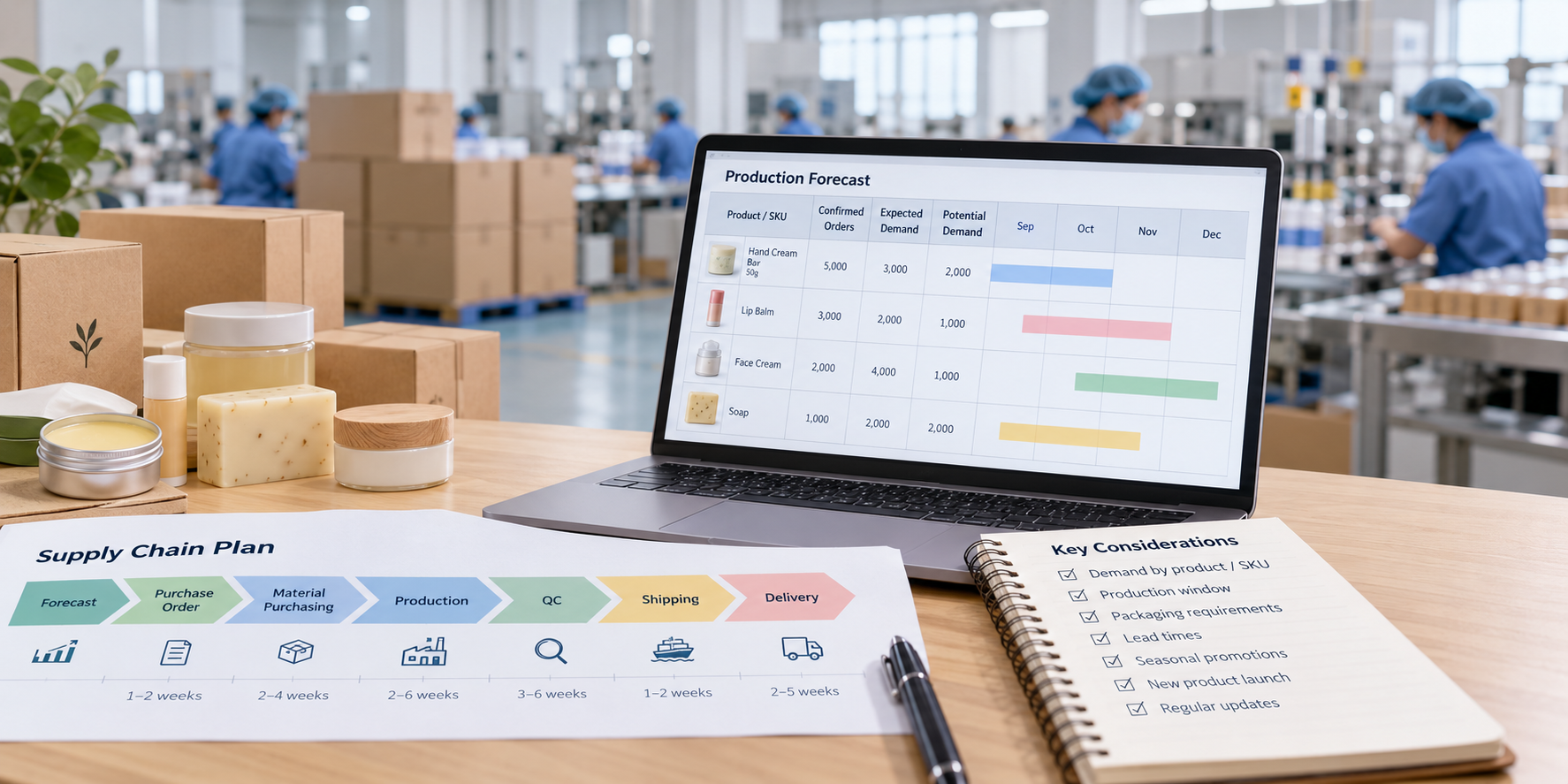
Confirmed orders – quantities already committed
-
Expected demand – realistic sales you anticipate
-
Potential demand – opportunities that are less certain
This gives your supplier a clearer picture of what is firm and what is still subject to change.
For example, instead of forecasting 10,000 units for the next quarter as one figure, you might show:
| Period | Confirmed | Expected | Potential |
| October | 2,000 | 1,500 | 500 |
| November | 2,500 | 2,000 | 1,000 |
| December | 3,000 | 3,000 | 1,500 |
This distinction matters when your supplier is deciding how much capacity and material to reserve.
Break the Forecast Down by Product
A total monthly figure is not particularly useful if you sell multiple products.
Your supplier needs to understand which products are likely to be required and when.
Include:
-
Product or SKU
-
Forecast quantity
-
Required production month
-
Packaging requirements
-
Any components with longer lead times
This becomes particularly important for products made from multiple components. A finished product may depend on packaging, labels, inserts or other parts arriving before assembly can begin.
Think in Production Windows, Not Exact Dates
Forecasting too precisely can create false certainty.
Instead of telling your supplier that you will definitely need 3,000 units on 15 November, consider giving them a production window such as:
Production required: mid-to-late November
This gives the factory something they can actually plan around while allowing your business some flexibility.
For regular orders, a rolling three- to six-month forecast can work well. The closer the production date gets, the more accurate and committed the information should become.
Highlight Changes in Demand
Your supplier will be particularly interested in anything that could significantly change the forecast.
For example:
-
A new product launch
-
Seasonal promotions
-
Retail expansion
-
A marketing campaign
-
A new customer order
-
Expected changes in packaging
-
A significant increase or decrease in sales
These factors can have a much bigger impact on production planning than a simple historical sales average.
Include Your Lead Times
A useful forecast should work backwards from your required delivery date.
Consider the complete timeline:
Forecast → Purchase Order → Material Purchasing → Production → QC → Shipping → Delivery
If production takes 30 days but certain packaging materials require another 20 days, your supplier needs to know early enough to secure those materials.
This is where production forecasting becomes more than a sales exercise. It becomes part of your supply chain planning.
Update the Forecast Regularly
A forecast is not a document you create once and forget.
For businesses sourcing from China, a rolling forecast is often more practical.
For example:
-
0–1 month: confirmed requirements
-
2–3 months: strong forecast
-
4–6 months: indicative demand
Update it regularly as sales information becomes available.
The goal is not to predict the future perfectly. It is to give your supplier enough visibility to prepare without encouraging unnecessary production or stockholding.
A Good Forecast Creates Better Communication
The most useful production forecast is not necessarily the most complicated one.
It should give your Chinese supplier a clear understanding of what you are likely to need, when you may need it, and how confident you are in those numbers.
When both sides are working from the same information, it becomes easier to plan materials, manage factory capacity and identify potential bottlenecks before they become urgent problems.
For growing brands, this can make the difference between simply placing orders and building a supply chain that can scale with the business.